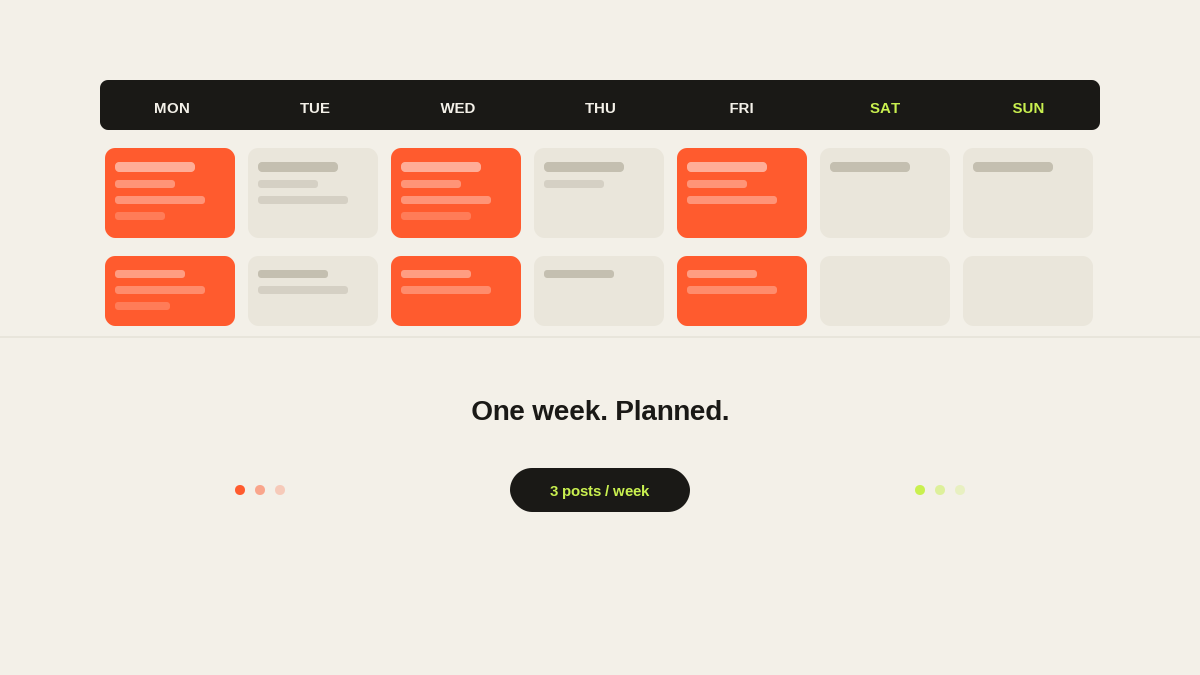
Seven days, one plan, nothing left to guess when you sit down to post.
A blank week is a trap. You tell yourself you'll figure out what to post when the time comes - and when the time comes, you post nothing, or post whatever is fastest. A content plan replaces that moment of hesitation with a decision you already made.
This is a one-week structure. Not thirty days, not a quarter. One week, built once, reused in different forms until it stops working.
Why one week, not one month
A month-long plan is easy to start and easy to abandon. A week is short enough to fill before you run out of ideas, and long enough to show whether you have a pattern.
Buffer's editorial team found that a fixed weekly structure - knowing which days get which type of content - makes gaps obvious. When Monday is always the how-to slot, you notice immediately when Monday is empty.
The seven-day structure
Assign each publishing day a role. The table below works for someone posting three to four times a week. Adapt the days and roles to your actual schedule.
| Day | Role | Format | Topic source | Prep needed |
|---|---|---|---|---|
| Monday | Teach something | How-to or step-by-step | A question you get repeatedly | Draft the steps the night before |
| Wednesday | Show your process | Behind the scenes | What you worked on this week | One photo or a short screen recording |
| Friday | Share a perspective | Opinion or lesson learned | Something that surprised you recently | A few sentences - keep it short |
| Flexible | Engage back | Reply, quote, or reshare | A comment or DM that asks a good question | None - respond in the moment |
Three posts a week is enough to stay visible without burning out. If you can only manage two, drop one of the weekday slots. If you want five, add a recommendation day and a question day.
One place for everything
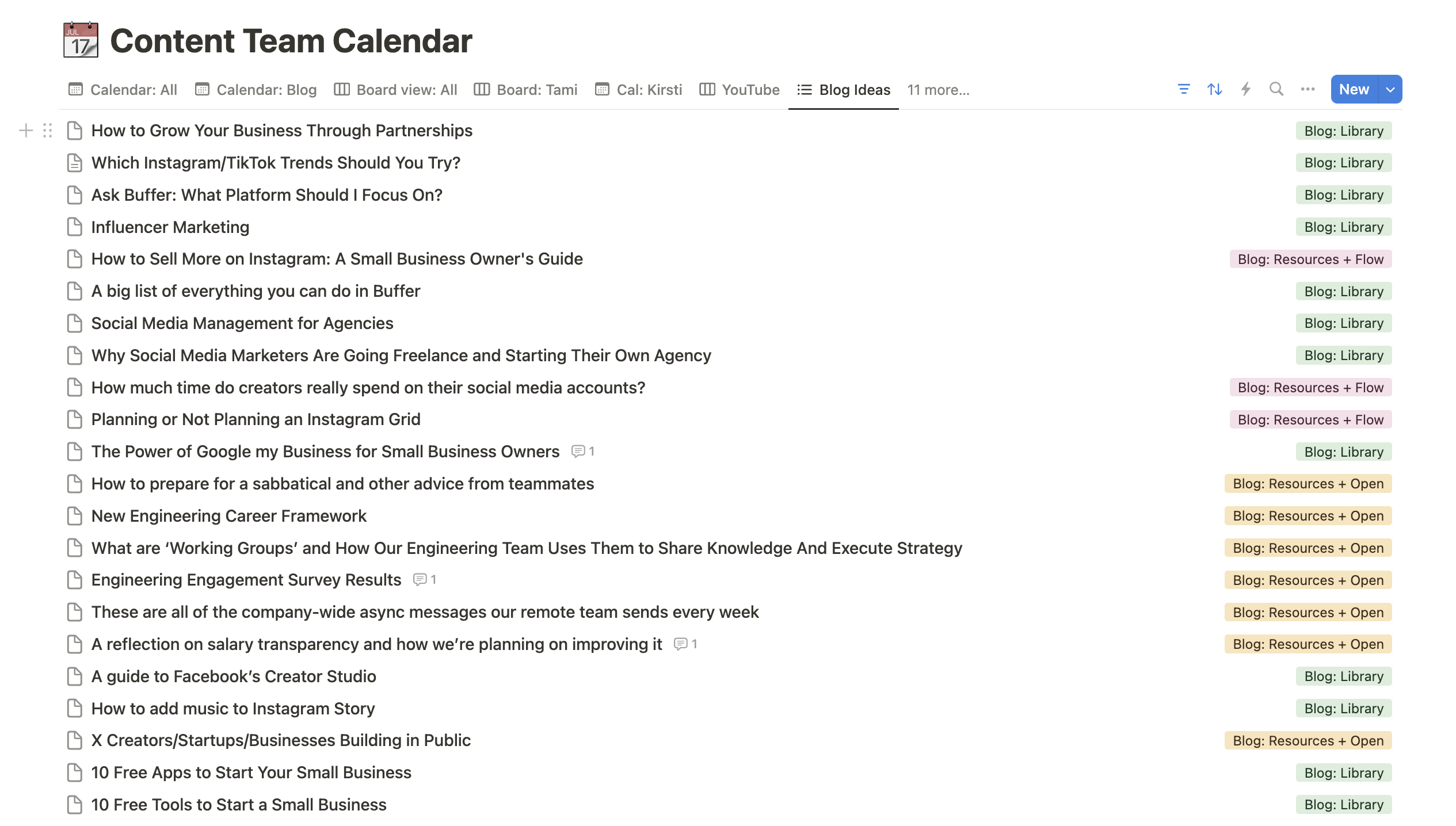
The structure above only works if ideas do not get lost. Buffer's team keeps every piece of content - idea, draft, scheduled post - in a single database. For a solo creator, that can be a Notion page, a spreadsheet, or a plain text file. The tool does not matter. Having one place does.
What matters most is the status field. Buffer tracks eight stages from idea to published. For a solo creator, four stages are enough:
- Idea - captured, nothing written yet
- Draft - written, not yet edited
- Ready - edited and prepared to post
- Done - posted, link saved
Filling the week
Start with last week. What did you actually work on? What questions came in? What felt interesting or frustrating? Those are your first five ideas. Then look at the week ahead and do the same.
Buffer schedules content in batches - blog posts the day before publication, social posts a week ahead. Batching protects you during busy weeks when you would otherwise skip posting entirely.
- Pick three days you will publish this week
- Assign each day a role: teach, show, share, or engage
- Write one idea per slot - a title or a single sentence is enough
- Block 20 minutes to draft one of them today
- After the week: note what you actually posted and adjust the structure
The weekly review
Buffer holds a biweekly editorial planning check and a monthly performance review. For a solo creator, ten minutes on Friday is enough: what did you post, what felt easy, what felt hard, what will you do differently next week.
The plan should get easier to fill over time. If it gets harder, the structure is wrong for how you actually work. Change the days, the roles, or the posting frequency until it fits.
Downloads

Leave a
comment