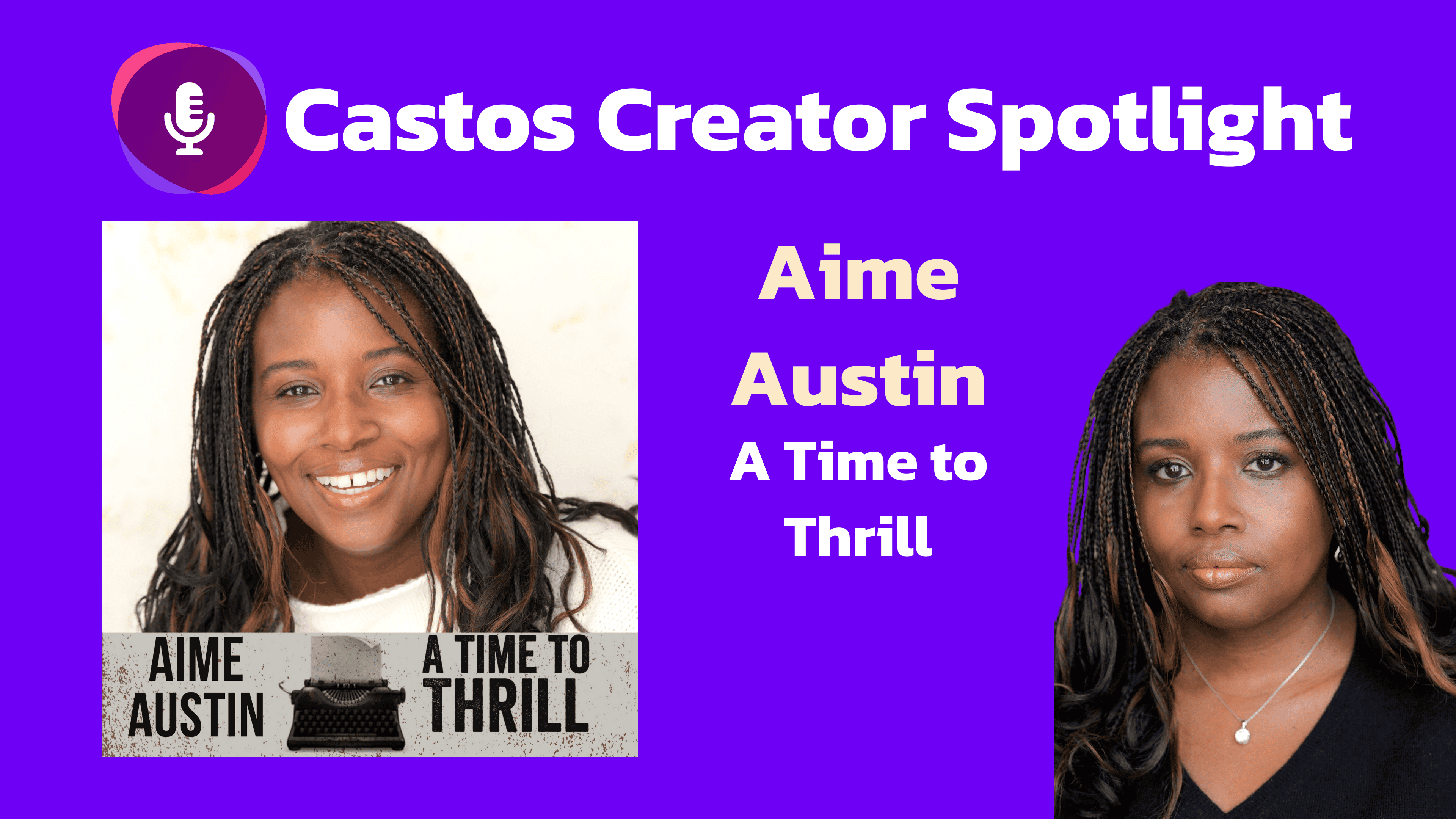
Borrow the planning approach behind A Time to Thrill: a clear purpose, a two-track content plan, and a monthly cadence you can keep up for years.
Most podcast plans fail because they're built around output: how many episodes, how fast, how many downloads by month six. Aime Austin's show, A Time to Thrill, is a useful counterexample. She's a former trial lawyer turned crime fiction author, and she started the show in 2020 to rebuild a community of women that had scattered. She wasn't chasing downloads. That one decision shaped everything else in her plan.
Start With the Reason, Then Build the Plan
Aime's purpose was specific: keep a conversation going with creative women. So the format follows from it. Once a month she publishes a long, unhurried interview with an author, visual artist, or other creator. Guests talk about process, struggle, and the thinking behind the work. No quick takes, no daily grind.
Notice what the purpose rules out. A show about community doesn't need a news-cycle schedule. A show built on depth doesn't need 20-minute episodes. When you know why the show exists, half your planning decisions get made for you, including length, frequency, and which guests make sense.
Run Two Tracks Off One Body of Work
The smartest planning move in this show is the second track. Alongside the interviews, Aime runs Politics of Justice, where she annotates her own Casey Cort novels chapter by chapter. The material comes from her years practicing juvenile and criminal law in Cleveland from 1996 to 2001, and from the 15 Casey Cort books she's written since Judged came out in 2014. She's now deep into Ransomed, the newest one.
These aren't summaries. She talks through what she was thinking when she wrote each scene and pulls the legal and human context into the open. That means a built-in content bank. She doesn't have to invent topics, because the chapters are the outline.
You probably have something similar: a back catalog, a course, a book, a client archive, a long-running project. Ask what you've already made that deserves a guided tour. A companion series based on existing work is cheaper to plan than a new show, and it gives longtime fans a deeper layer.
- Track one: guest conversations, which bring in new voices and new audiences.
- Track two: solo material drawn from your own work, which you control completely and can batch.
- The two tracks balance each other. When guest scheduling slips, you still have something ready to publish.
Pick a Cadence You Can Keep, Then Let It Compound
Monthly is a legitimate publishing plan. Aime's interviews land on a reliable monthly schedule, and the audience has grown slowly through organic newsletter building and a format that trusts listeners to stay for the full conversation. The pace is intentional. Reliability does more for a small show than frequency does, because listeners learn when to expect you and the show never goes dark.
Her own goal is refreshingly plain: “A year from now, I'd like to be steadily producing and having more great conversations.” That's a plan you can actually hit. It's measured by consistency rather than a milestone you can't control.
Preparation is the other half. Aime has talked publicly about monthly podcasting, knowing your audience, and why preparation matters. With only one main episode a month, each interview carries more weight, so research and question planning are where your time should go, not editing tricks.
A year from now, I'd like to be steadily producing and having more great conversations. It's created a sense of community in a world where many creatives are fractured.
- Aime Austin, A Time to Thrill
Build Your Own Twelve-Month Plan
Here's how to translate this into a plan for your own show. Do it in one sitting, then revisit it quarterly.
- Write a one-sentence purpose that doesn't mention downloads or revenue.
- Choose a cadence you could sustain for a full year even during your busiest month. Monthly is fine.
- Define your main format and typical length based on your purpose, not on what other shows do.
- Identify a second track built from material you already own, such as a book, course, or archive.
- List twelve guest candidates and send the first batch of invites this week.
- Block prep time on your calendar before each interview for research and questions.
- Set up a newsletter signup from episode one and mention it in every episode.
- Pick one success measure tied to consistency, like episodes published on schedule.
- Schedule a quarterly review to decide what to keep, cut, or expand.
The point of all this is that a podcast plan doesn't have to be aggressive to work. A clear reason, a repeatable format, a second track that mines your own work, and a schedule you never miss will outlast most launch-and-burn strategies. Slow growth is still growth, especially when the audience you're building is the community you wanted in the first place.

Leave a
comment